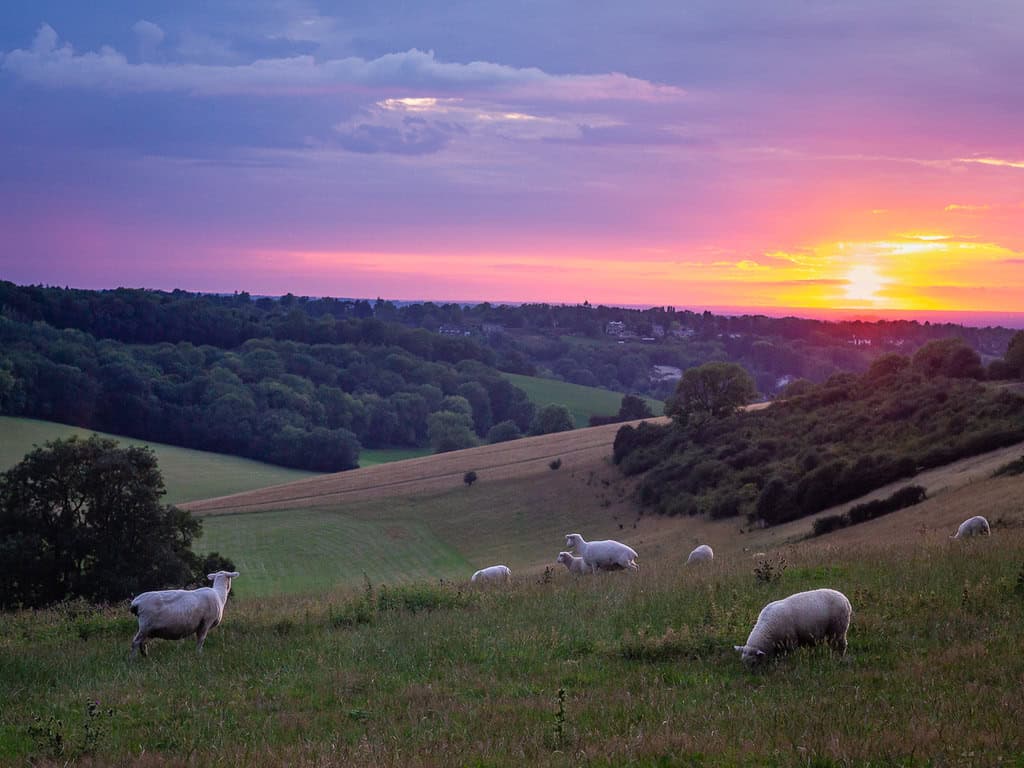
Wildlife on the North Downs is easy to find around Botley Hill. Near Woldingham, The farmhouse sits inside the Surrey Hills National Landscape, formerly an Area of Outstanding Natural Beauty, on the high ridge of the North Downs. The Titsey Estate around us is a patchwork of working farmland, ancient woodland and open chalk downland. That mix of habitats packs a surprising amount of wildlife into a short walk.
The land changes with the seasons. Spring brings bluebell woods and skylarks, and autumn brings harvest fields and beech colour. The walk from the car park rarely looks the same twice.
Wildlife on the North Downs through the seasons
Spring (March to May)
The first signs of the year appear on the hedgerows and woodland floors. Primroses and wood anemones give way to bluebells in late April and May. Skylarks climb over the open fields and sing for minutes at a time. The woods fill with blackcaps, chiffchaffs and drumming woodpeckers. Brimstone and orange-tip butterflies appear on the first warm days. Slow worms and the occasional adder come out to bask on sunny banks.
Summer (June to August)
Summer is the best time for the chalk grassland. Cowslips and early orchids give way to pyramidal and common spotted orchids. Harebells, field scabious, knapweed, wild marjoram and wild thyme cover the slopes. They attract bees, burnet moths and butterflies such as marbled white, common blue and meadow brown. On the best chalk slopes, the chalkhill blue flies in July and August. Red kites and buzzards circle over the ridge on warm air, and kestrels hover along the field edges. At dusk, bats come out over the lane and the farmyard.
Autumn (September to November)
The beech woods turn copper and gold through October. The leaf litter brings up fungi, including puffballs, fly agaric and many smaller species. Hedgerows hang heavy with blackberries, sloes, hips and haws, and thrushes and finches feed on them before winter. Autumn is also a good time to see roe and fallow deer on the woodland edges. The first redwings and fieldfares arrive from late October.
Winter (December to February)
Bare trees make birds easier to spot. Flocks of redwings and fieldfares work the hedges and fields. Yellowhammers and linnets gather in mixed groups across the stubble. Tawny owls call from the woods on still nights. Brown hares are often easiest to see on open fields in the low winter sun. A frosty morning on the ridge, with the Weald in mist below, is hard to beat.
All year round
Foxes and badgers are about at dawn and dusk. You are more likely to see their tracks and setts than the animals themselves. Green woodpeckers feed on anthills in the short grass. Robins, wrens and great tits stay in the hedgerows all year.
Where to see wildlife on the North Downs
The best way to spot wildlife near woldingham on the North Downs is on foot. Our walks cross farmland, woodland and chalk slopes, and each one starts or finishes at the farmhouse. Stop on the ridge for the views across the Weald, and keep an eye on the sky for kites and buzzards.
Learn more about the North Downs
The Surrey Wildlife Trust and the Surrey Hills National Landscape team run guided walks and events through the year. Their websites are worth a look before a visit. Ask at the bar too. Several of our staff and regulars walk these paths daily, and they are always happy to point you towards whatever is out that week.
Walking with care
The land around us is working farmland and protected habitat. Please keep to the marked paths and avoid trampling the grassland and crops. Dogs are very welcome at the pub, but keep them on a lead near livestock. Keep them on a lead in spring and summer too, when ground-nesting birds like skylarks are raising young. Take your litter home with you, and shut gates behind you so animals stay where they should.